

case study
Provide solution on increasing voter turnout among Canadian youth
There is a growing trend of declining voter turnout among the youth in Canada. To address this issue, Elections Canada has tasked my team to answer the given problem statement - Where do Canadian youth get information regarding the electoral process? Why do they use these channels? I'm part of a team that conducted user research for 8 months and designed a prototype for the solution.
Goal - Find out why youth are not voting and propose a solution
Profile - Election Canada is a non-partisan agency responsible for administering federal elections and referendums in Canada
Scope - Conduct research to the problem for 8 months
Design Output - Design a prototype to demonstrate how it solves the problem
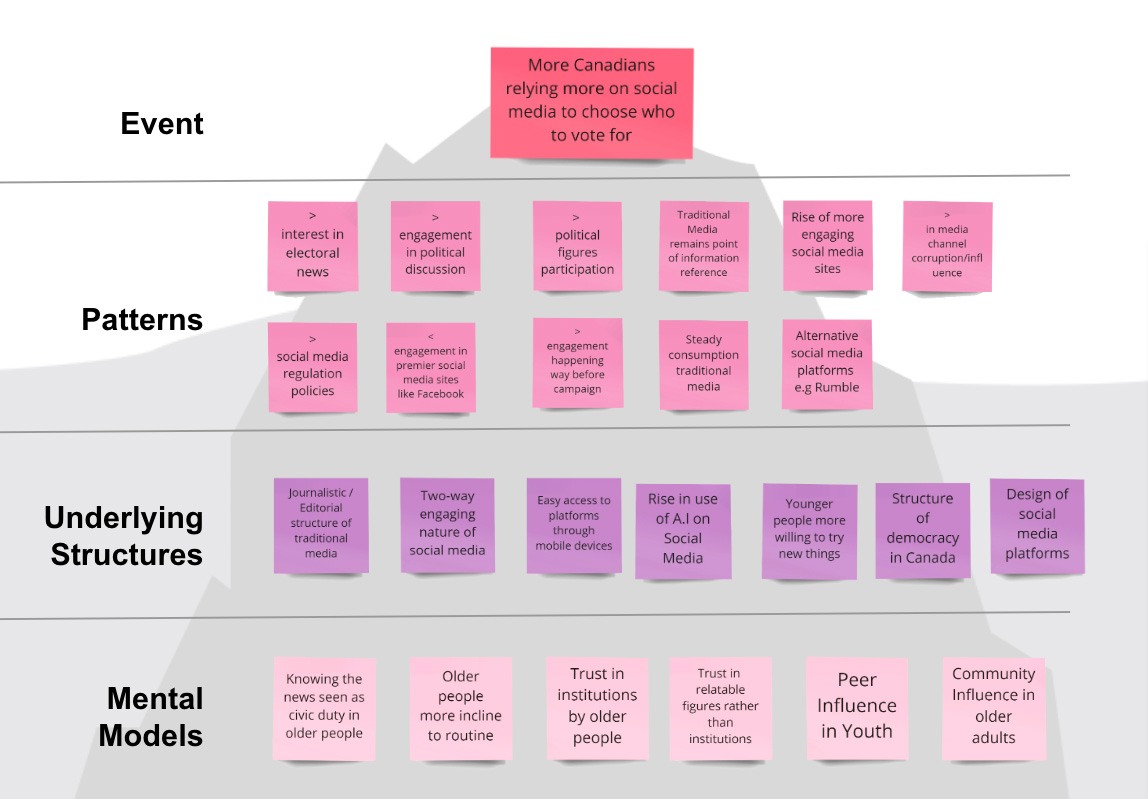
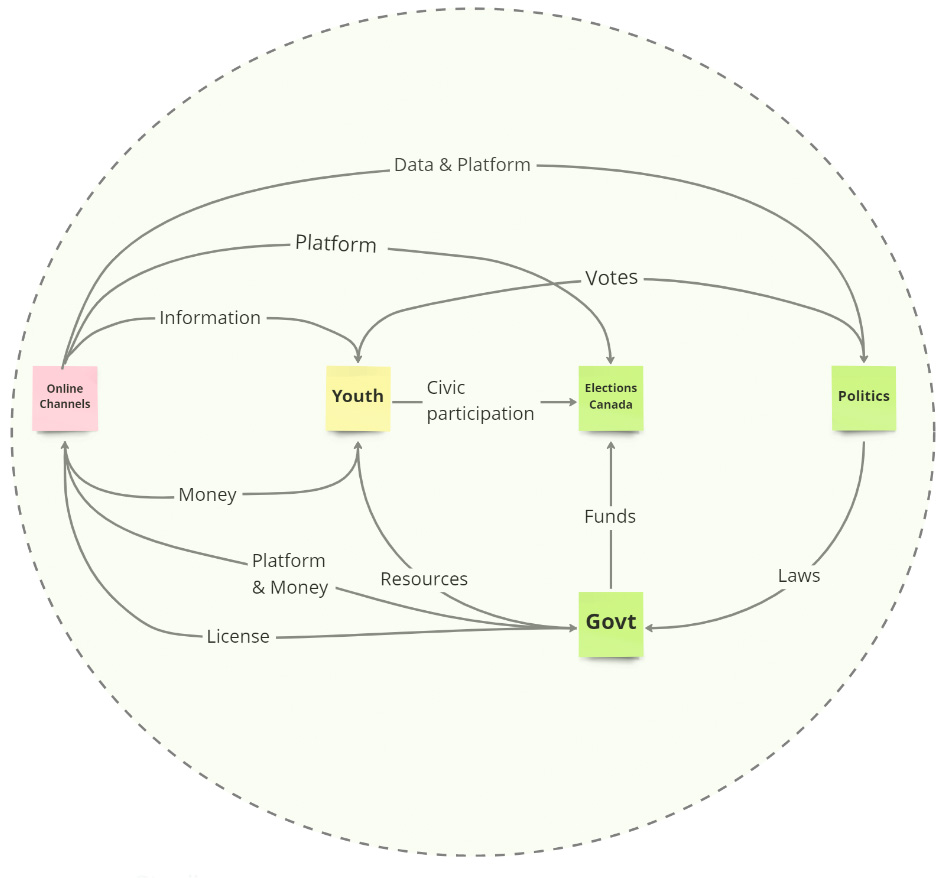
To jumpstart our research, our team worked on understanding the complexity of the problem by looking at the whole Canadian political, electoral and societal landspace and see the relationships between them. As a form of system thinking we created an iceberg model to understand the underlying causes of why Canadian youth would not vote in an election. While an ecosystem map was also created so our team can see the relationship of each major stakeholders and see the value and dependencies that connects them.
From this methods we found out that initial findings - (1) increase in political engagement on online channels, (2) traditional Media remains point of information reference, (3) political strategies influenced by social media behavior, and (4) the power of social media in political landscape. Through these findings we asked ourselves with a refined focus question - How do different communication channels influence varied demographics to vote?
Iceberg Model and Ecosystem Map
literature review
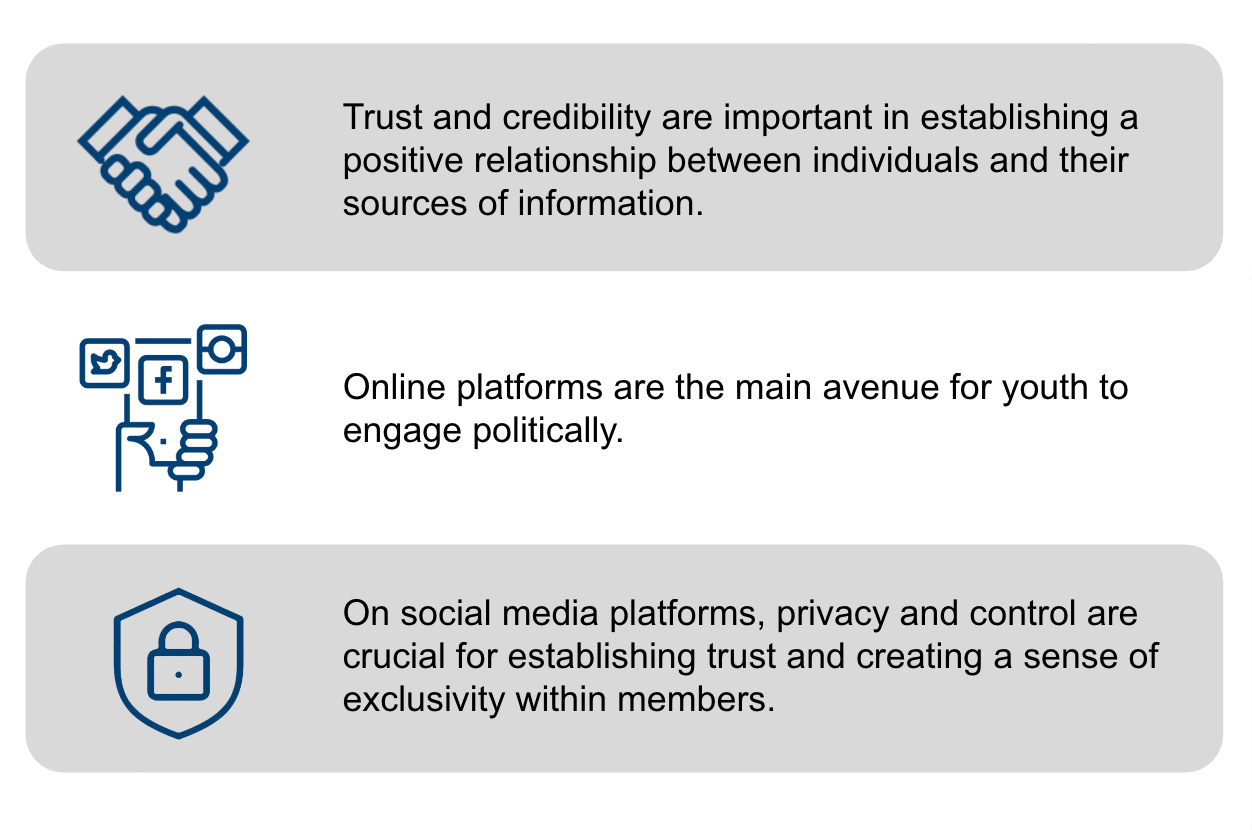
findings from 40+ sources
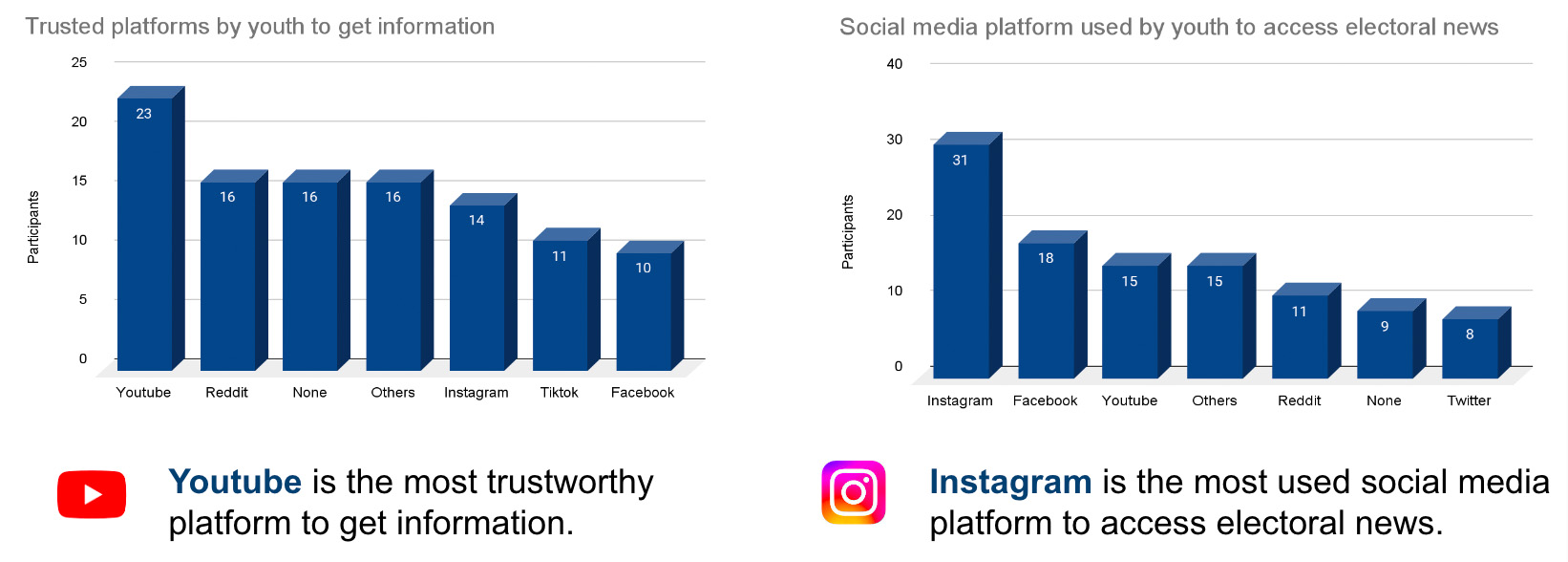
As part of our study design to gather data, we created a survey that is sent out to Algonquin College students. Questions are aimed to gather a general data about their demographics, elections behavior, and social media habits. A total of 129 students were part of the survey. From our survey findings, results show that Youtube and Instagram are the most used platforms by the youth. In the graphs below, we see that participants are more likely to trust platforms where they get their electoral news.
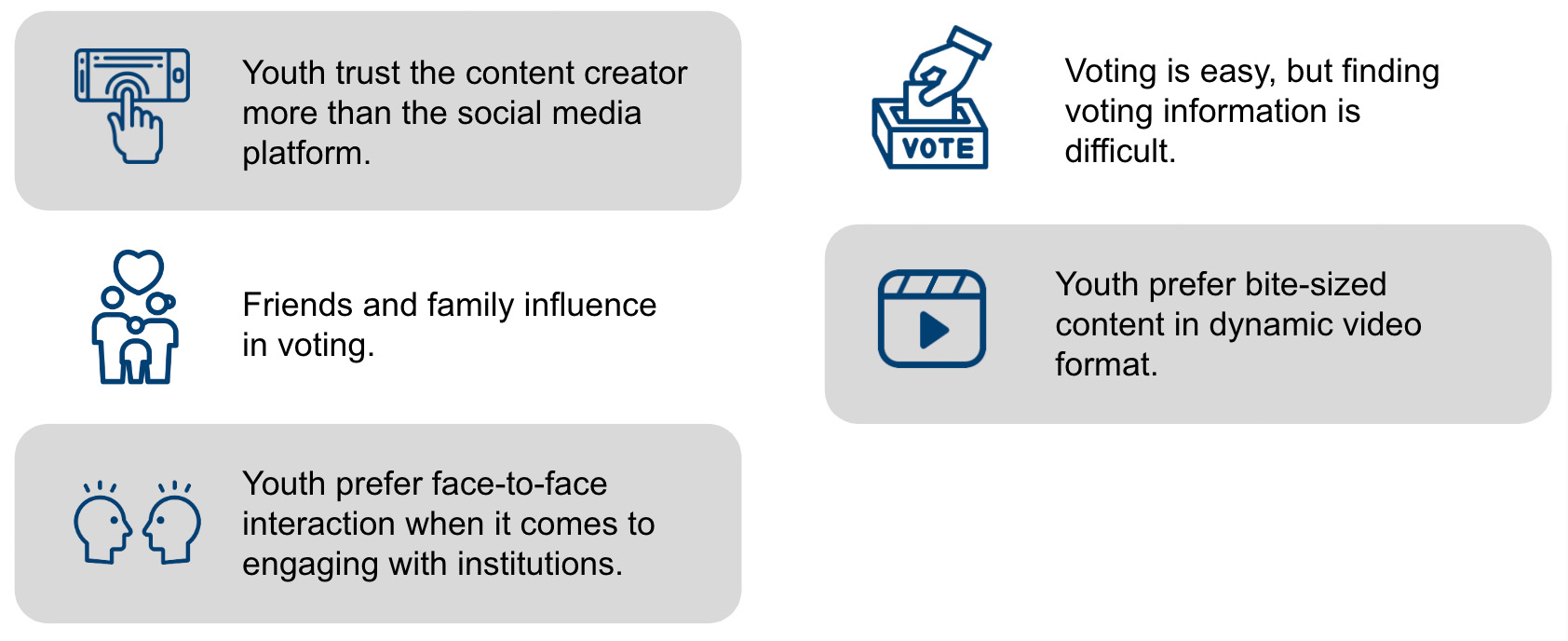
From the survey participants, we chose 12 to be part a group that we will be interviewed. We also reached out to 8 subject matter experts to provide an in-depth view of the problem. These experts are from the field of political science, media, psychology, etc. The interview findings suggests that the youth trust the content creators over social media platforms; friends and family are influential when deciding if they would vote; and that bite-size content and personal interaction is crucial in engaging the youth. The most interesting part of our findings was that our participants, especially the young youth, find that voting itself was easy, but it was finding information on whom to vote for was difficult.
Survey Findings
Interview Findings
After analyzing the findings from our literature review, survey and interviews we came up with the following insights - (1) The youth are more motivated to vote if there is a prior engagement. Currently, engagement with the youth only happens closer to elections and this feels less genuine to them. (2) Youth prefer an engaging tone and personalised messaging when communicating with them. It is also important to not treat them as a homogenous group but show unique experiences and talk about issues relevant to them. (3) Because of the complex nature of the social media platforms like complexity of algorithms, they do not guarantee that youth will receive the information conveyed on these platforms. They are more useful as a relationship building tools. (4) Compared to older adults who see voting as a civic responsibility, youth are only motivated to vote if there is a party aligned with their needs.
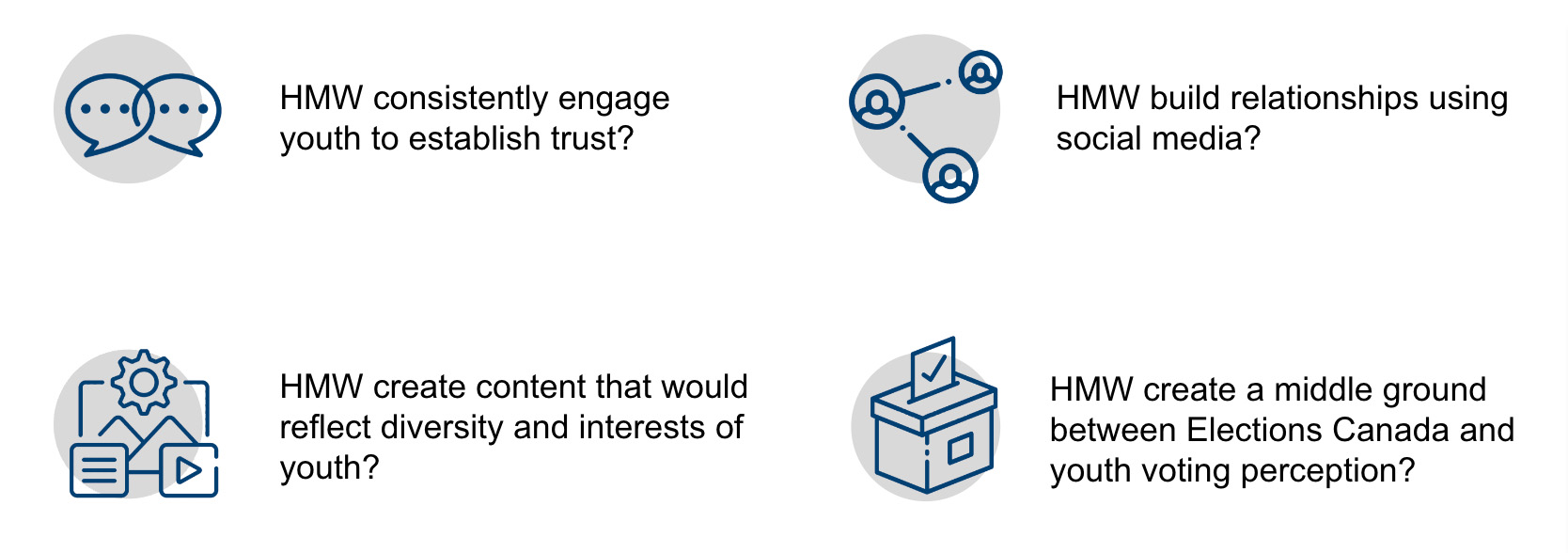
From our gathered insights, we generated How Might We’s, here rephrase problems into statements that encourage creative and open-ended thinking. So as we went to ideation process we asked ourselves - How might we consistently engage youth to establish trust? How might we build relationships using social media? How might we create content that would reflect diversity and interests of youth? How might we create a middle ground between Elections Canada and youth voting perception?
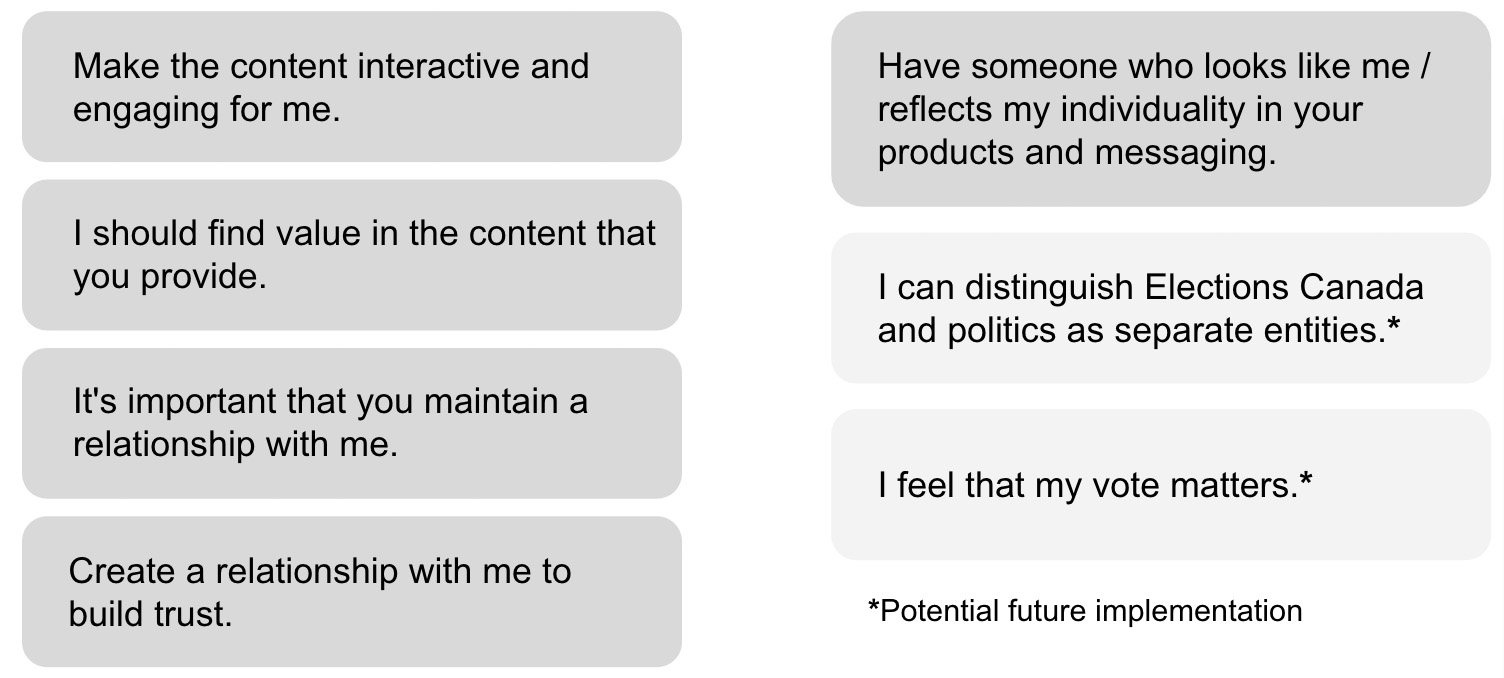
As we entered the ideation phase, we created Experience Principles which are fundamental guidelines to helped us shape the experience of our solutions from the lens of the youth with statements in a first person point of view.
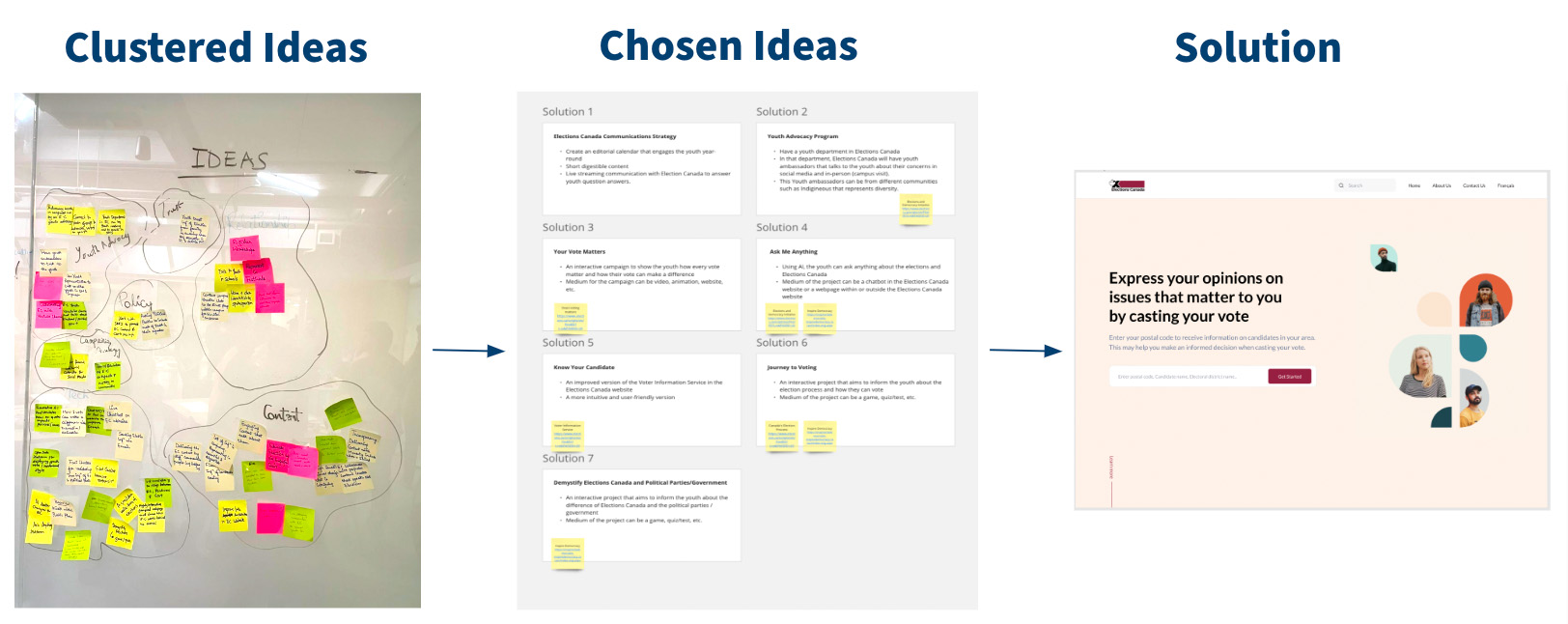
To kickstart our ideation process, we used the method Crazy 8s to come up with many ideas as possible which we then grouped into clusters. From those clusters we came up with one main idea that represented each cluster, making a total of 7 ideas. Based on your team’s feedback, we decided to focus on a idea which we felt solve as major pain point of youth that we got from our research, whom to vote is a major concern rather than how to vote. This idea also served as an anchoring point for other ideas the team were interested in exploring.
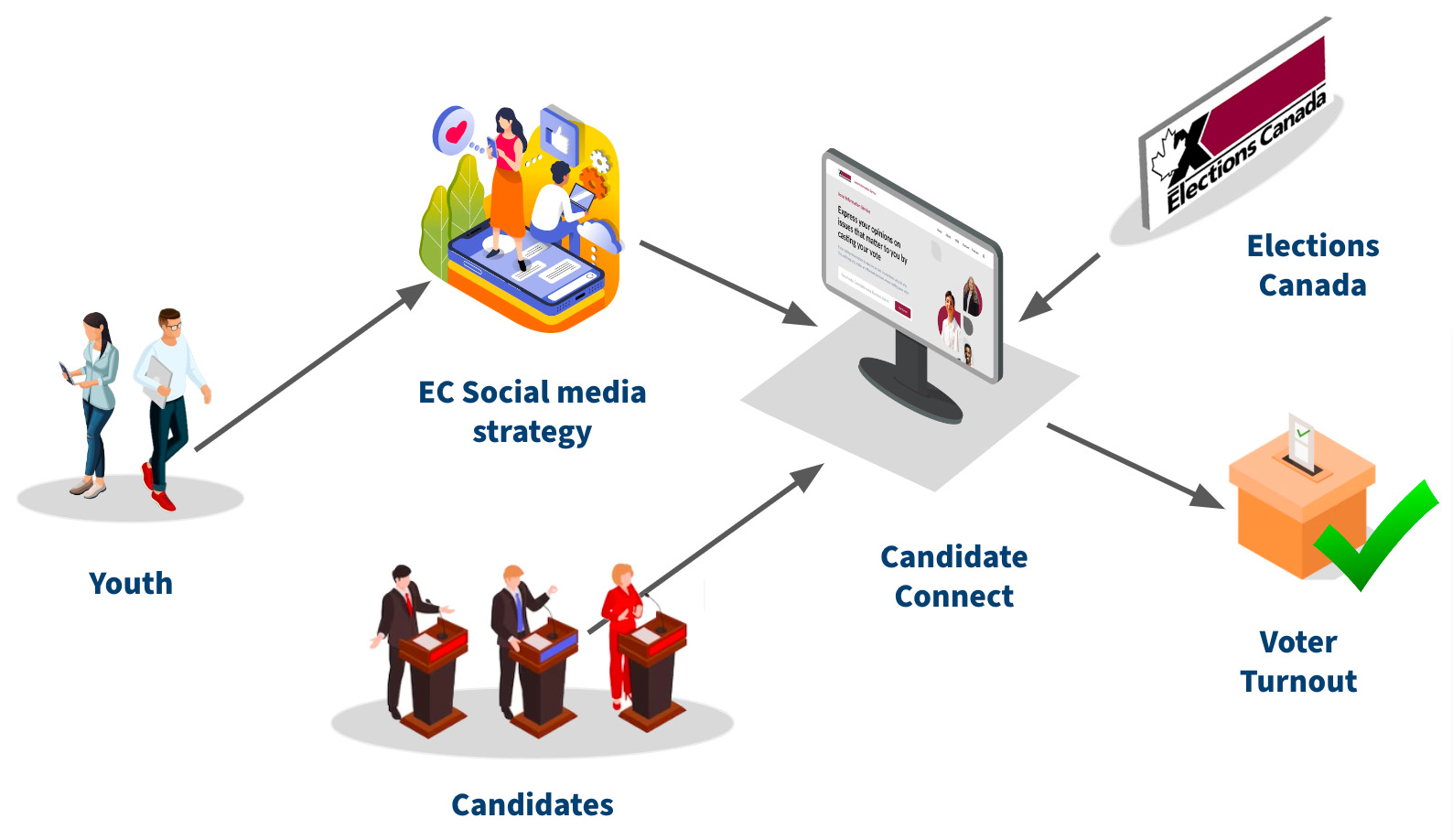
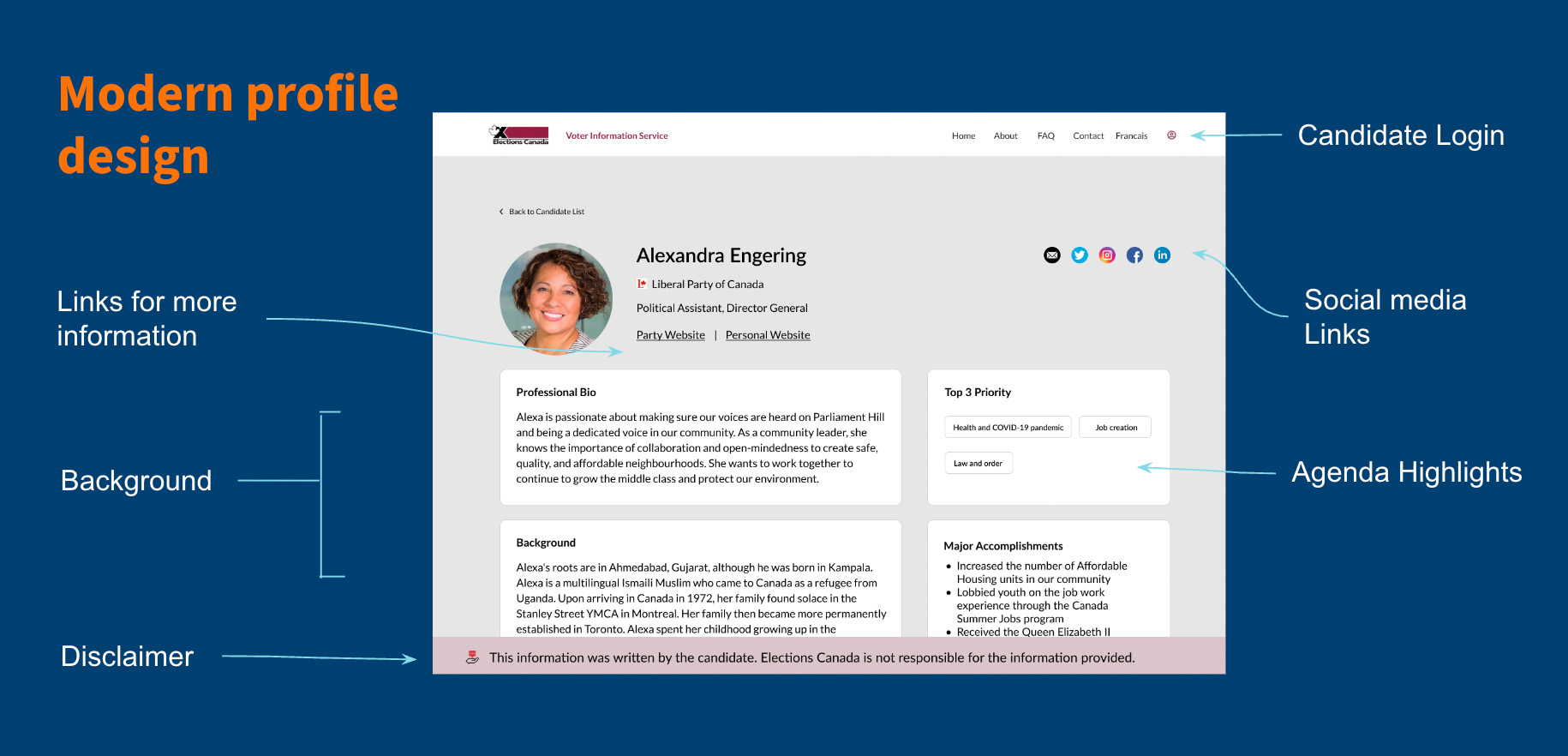
The solutions map we see here represents the bigger picture of our idea, it consists of a social media strategy, Candidate Connect platform and a candidate profile platform. How it would work is, the youth will engage with a social media ad run by Elections Canada as a part of the social media strategy, then the ad would direct them to Candidate Connect. Which would sit on the current Voter Information Service website. This platform contains candidate information provided by the candidates themselves. The end result would be youth finding real, trustworthy information which adds value in them making informed decision and hence increasing voter turnout.
Solutions Map
<
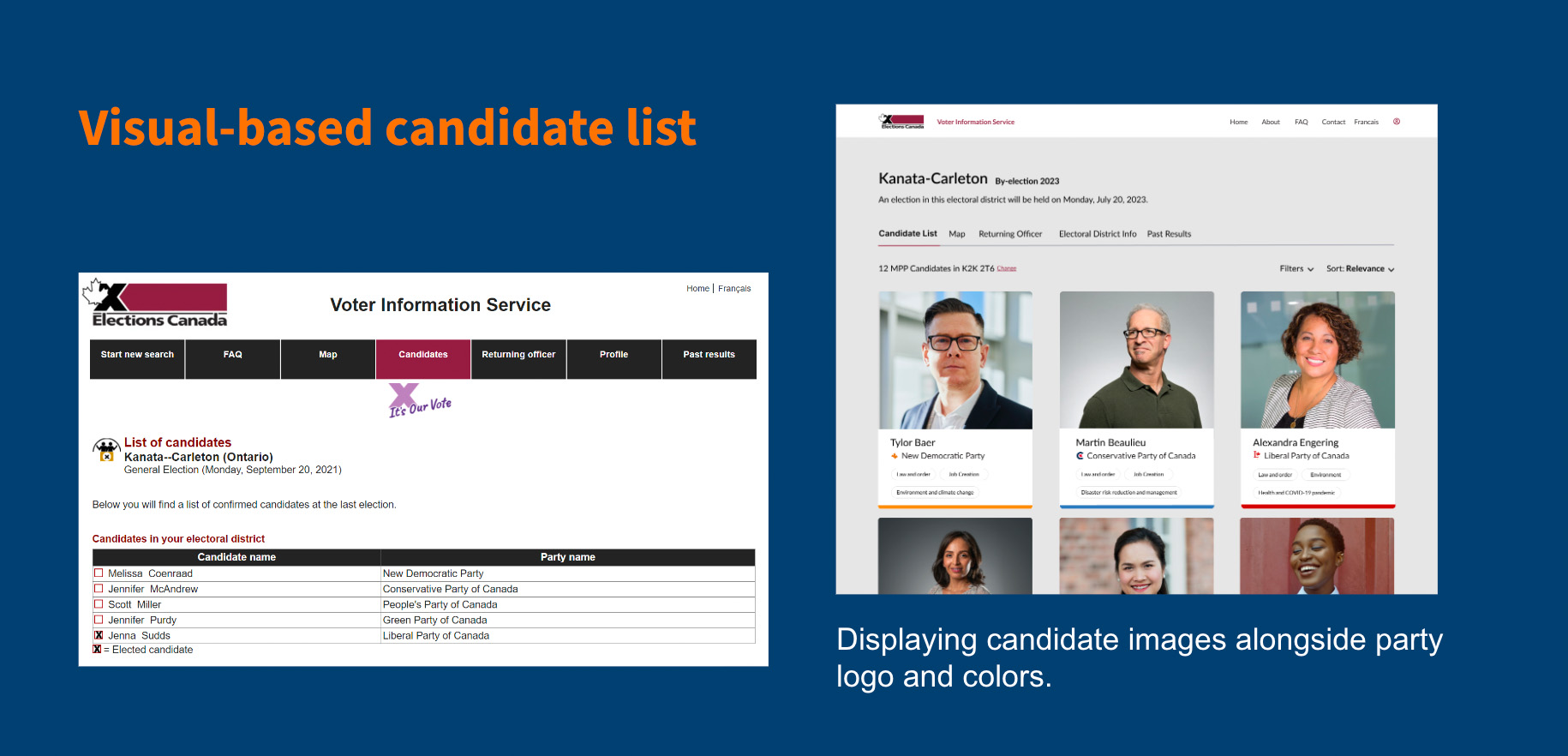
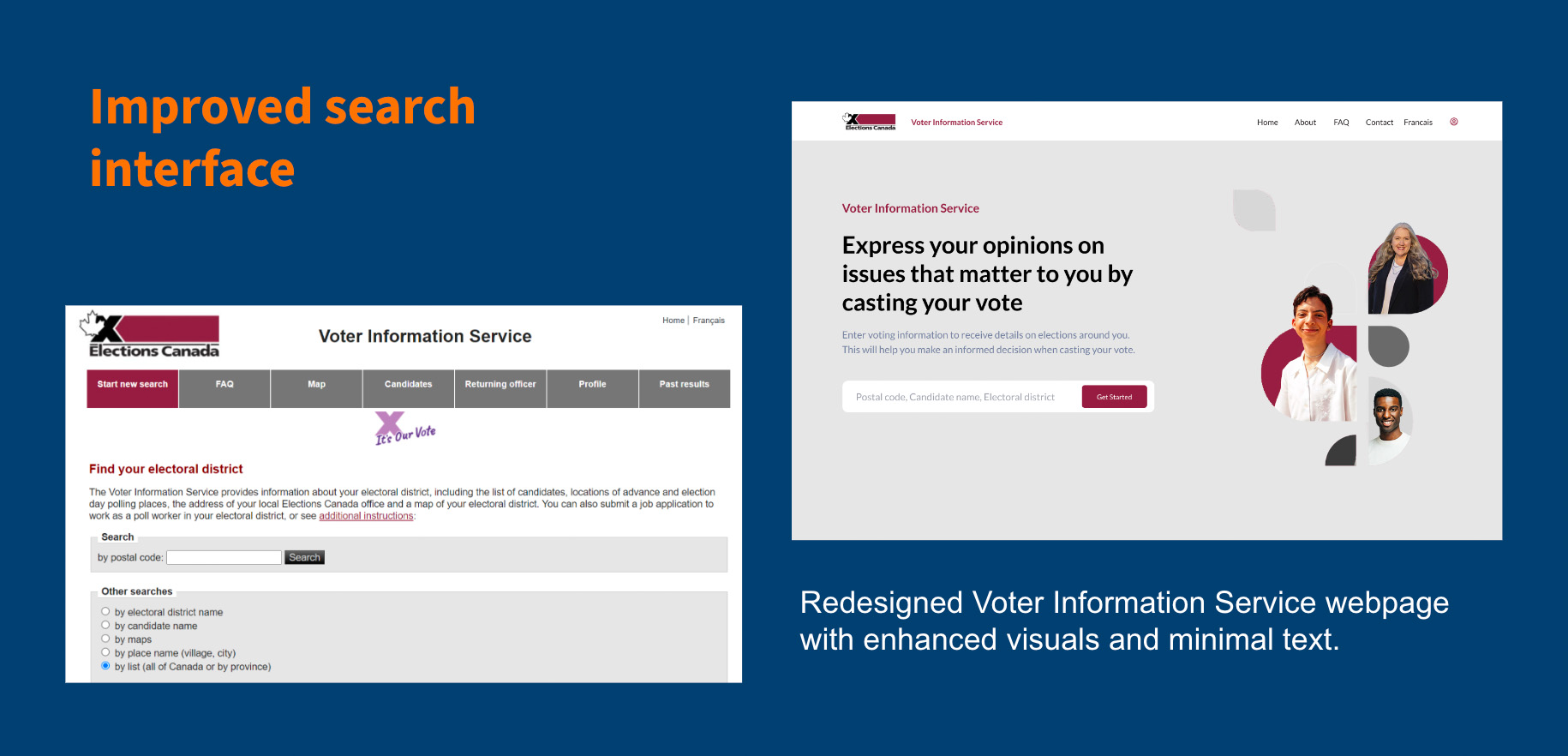
Through the Candidate Connect platform, we aim to improve the current Elections Canada Voter Information Services page. We also aim to create a smooth process for youth to gather information about candidates, which is a crucial need we picked up from our interview findings.
I would like to conclude by talking about the impact of this project in my UX skills. This project provided me a great experience on how to properly conduct user research. The methods that were implemented particularly the literature review at the start has given me a new method I can use in the future. I also found it useful as we create a documented case study of our work. The survey and interview while a staple of most user research methods have given me more exposure to hone my skills on those methods. Lastly, the I also had the opportunity to work with other UX researchers and learn from my colleagues. Collaborating with others allowed me to develop my communication, build cohesion, and work under a single goal. Overall, this project gave me experience in the technical and soft skills that I need in my UX journey.